

Learning photography on your own is easier than it has ever been. There are excellent books, videos and online tutorials covering almost every camera, technique and photographic subject.
The difficulty is often knowing which advice applies to you.
When I work with photographers individually, the useful part is not simply explaining aperture, shutter speed or composition. It is being able to look at what they are doing, identify where something is going wrong and concentrate on the particular areas that will make the greatest difference to their photography.
That may mean understanding a camera more thoroughly, improving exposure and focus, recognising better light, strengthening composition or reviewing photographs to understand why some images work better than others.
One-to-one tuition allows those subjects to be dealt with in the context of your own photography rather than as part of a fixed course.
Learn to See More Clearly
Camera technique is only part of photography. A great deal of improvement comes from learning to recognise what is happening in front of you before you press the shutter.
During tuition, I can help you look more critically at viewpoint, composition, light and the relationship between different elements in the frame. Often, a small change in camera position, timing or framing can make a much greater difference than changing equipment.
Reviewing photographs together is particularly useful because we can compare images and discuss why one works better than another. Over time, this helps you make those decisions more deliberately when you are photographing on your own.

One of the many stunning cliff tops in the Algarve Portugal
Understand Your Camera Better
Modern cameras can do an extraordinary amount, but that can also make them unnecessarily complicated. Many photographers use only a small part of what their camera can offer simply because they are unsure which settings matter for the type of photography they enjoy.
During one-to-one tuition, we can work with your own camera and concentrate on the controls and settings that are actually useful to you. That might include exposure, autofocus, metering, ISO, aperture and shutter speed, but it does not need to become a tour through every item in the menu.
The important part is understanding why you are changing a setting and what effect it will have on the photograph. Once that becomes clear, the camera starts to become a tool rather than something you have to think about constantly.
Receive Useful, Specific Feedback
When you review your own photographs, it can be difficult to see why one image works better than another. A second pair of experienced eyes can often identify issues that are easy to miss when you are too close to the work.
During tuition, we can look at your photographs together and discuss specific things such as composition, light, focus, timing, background distractions and editing. The point is not simply to say whether an image is good or bad, but to understand what could be improved and why.
That kind of feedback is most useful when it is tied to your own photographs, because you can apply it directly the next time you are out shooting.
Tuition Built Around the Photography You Enjoy
Different types of photography demand different skills. The approach to a landscape is not the same as the approach to a portrait, a macro subject or a product photograph.
One-to-one tuition allows us to concentrate on the kind of photography you actually enjoy rather than following a fixed syllabus. That might mean working on composition and light for landscapes, camera and lighting technique for portraits, or greater control over depth of field and focus for close-up work.
The advantage is that the tuition remains relevant to the photographs you want to make.

The sunrise from one of the many stunning beaches in Central Algarve in Southern Portugal
Learn from Practical Experience
Some photographic problems are easier to understand when you see them happening in front of you rather than reading about them afterwards.
During tuition, I can show you practical ways of dealing with situations such as difficult light, distracting backgrounds, changing conditions or equipment settings that are slowing you down.
These are often small adjustments rather than dramatic techniques, but they can make the process of taking photographs more controlled and more consistent.
Improve Your Editing Workflow
Post-processing is an important part of digital photography, but it is easy to spend too much time experimenting without really understanding what each adjustment is doing.
Tuition can include Lightroom or Photoshop and can be based around your own photographs. We can look at areas such as exposure, colour, local adjustments, cropping and sharpening, with the emphasis on making deliberate changes rather than applying effects for their own sake.
The aim is to help you understand which adjustments genuinely improve an image and which are unnecessary..

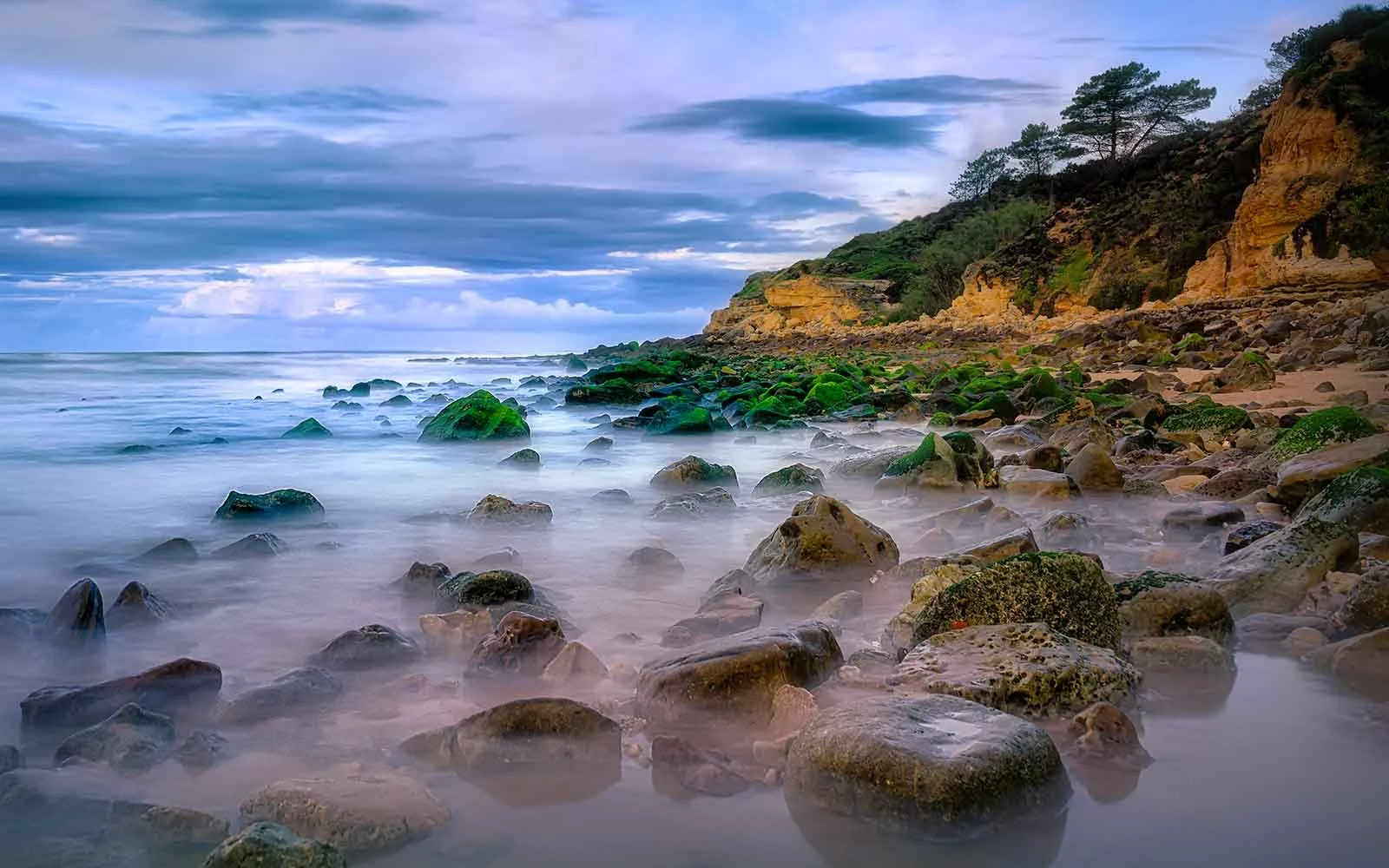
Evening View of the beach at Olhos de Agua Algarve Portugal
Is One-to-One Photography Tuition Worth It?
One-to-one tuition is most useful when you have a particular problem to solve or an area of photography you want to understand more clearly.
It will not replace practice, but it can make that practice more productive by helping you identify what matters, avoid unnecessary trial and error and understand why a particular approach works.
If you would like to see how my tuition is structured, you can find details of my one-to-one photography tuition and workshops here.
