

Much of my recent coastal photography has been close to home, between Vilamoura and Quarteira, around Olhos de Água and at Praia dos Arrifes. Returning to these places lets me photograph how they change with the light, tide and activity on the water.
Near Vilamoura, fishing boats and the two harbour lighthouses provide subjects beneath a partly cloudy sunrise sky. At Arrifes, I particularly like high tide, when water surrounds the rocks and waves bring movement into the photograph.
This guide concentrates on those locations and the conditions that make them worth photographing.
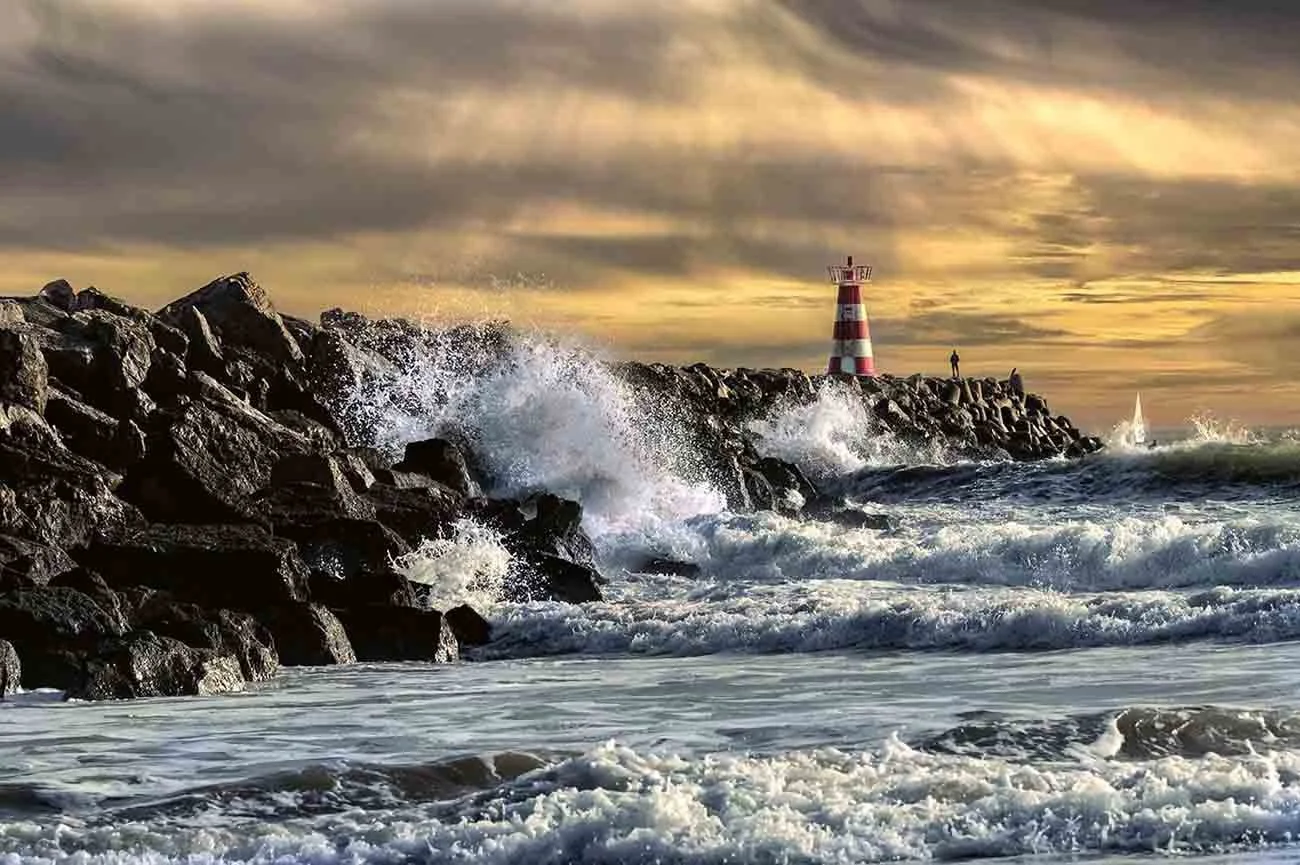


Photographing Between Vilamoura and Quarteira
The beach between Vilamoura and Quarteira is one of the places I photograph regularly. At the Vilamoura end, the harbour walls and two small lighthouses—one red, one green—provide fixed subjects, while fishing vessels and occasional sailing boats move through the scene.
This gives you two different ways to approach the photograph. You can build a composition around the harbour structures, or include a passing boat. With a boat, timing matters: a vessel overlapping a lighthouse or harbour wall can be difficult to distinguish. Waiting until it reaches a clear stretch of water can give it more separation.
Towards Quarteira, the path leads to the fishing harbour, where boats land their catch and moor. That working activity offers a different subject from the wider coastal view.
I particularly enjoy photographing this stretch at sunrise with a partly cloudy sky. Allow room for the sky when the clouds contribute to the photograph, but check that the harbour or boat still has enough presence in the frame.
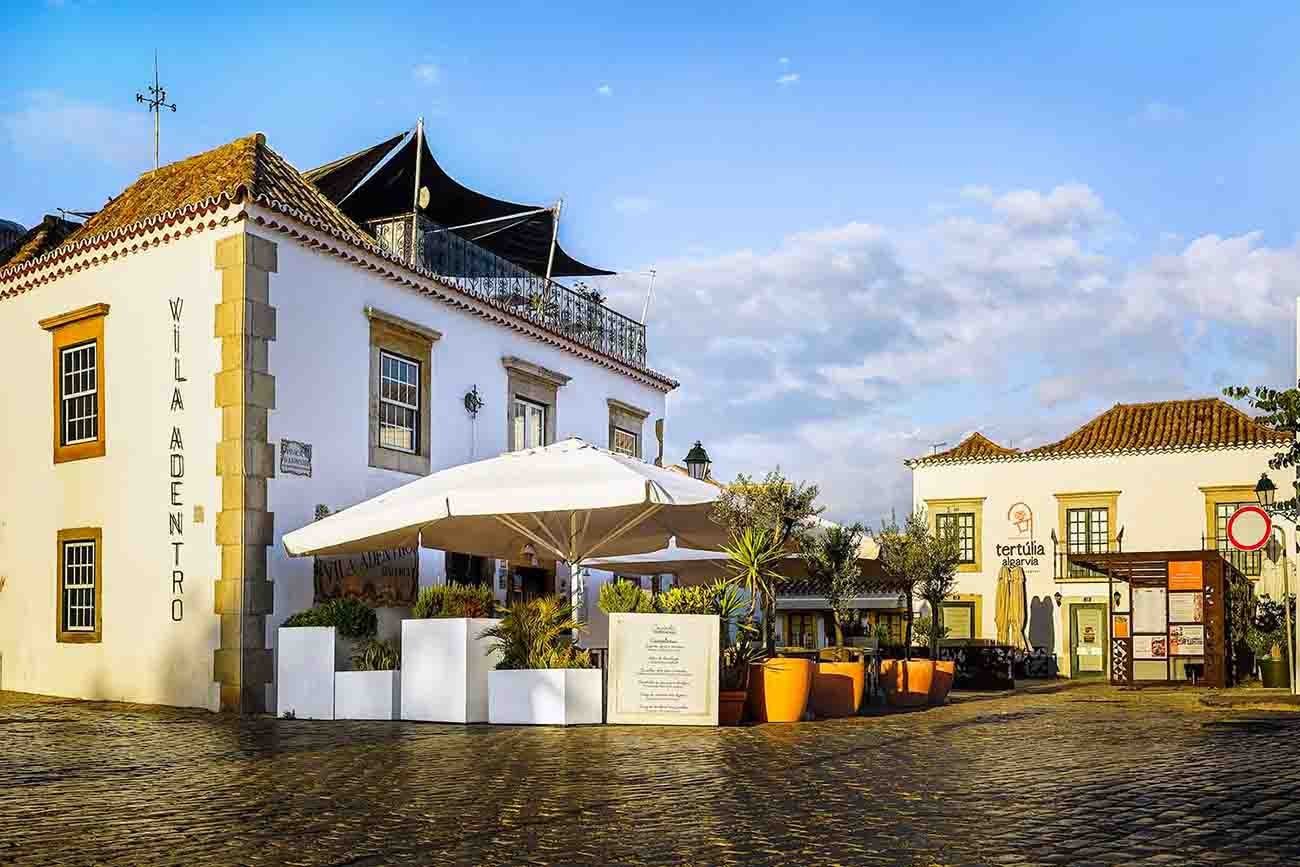


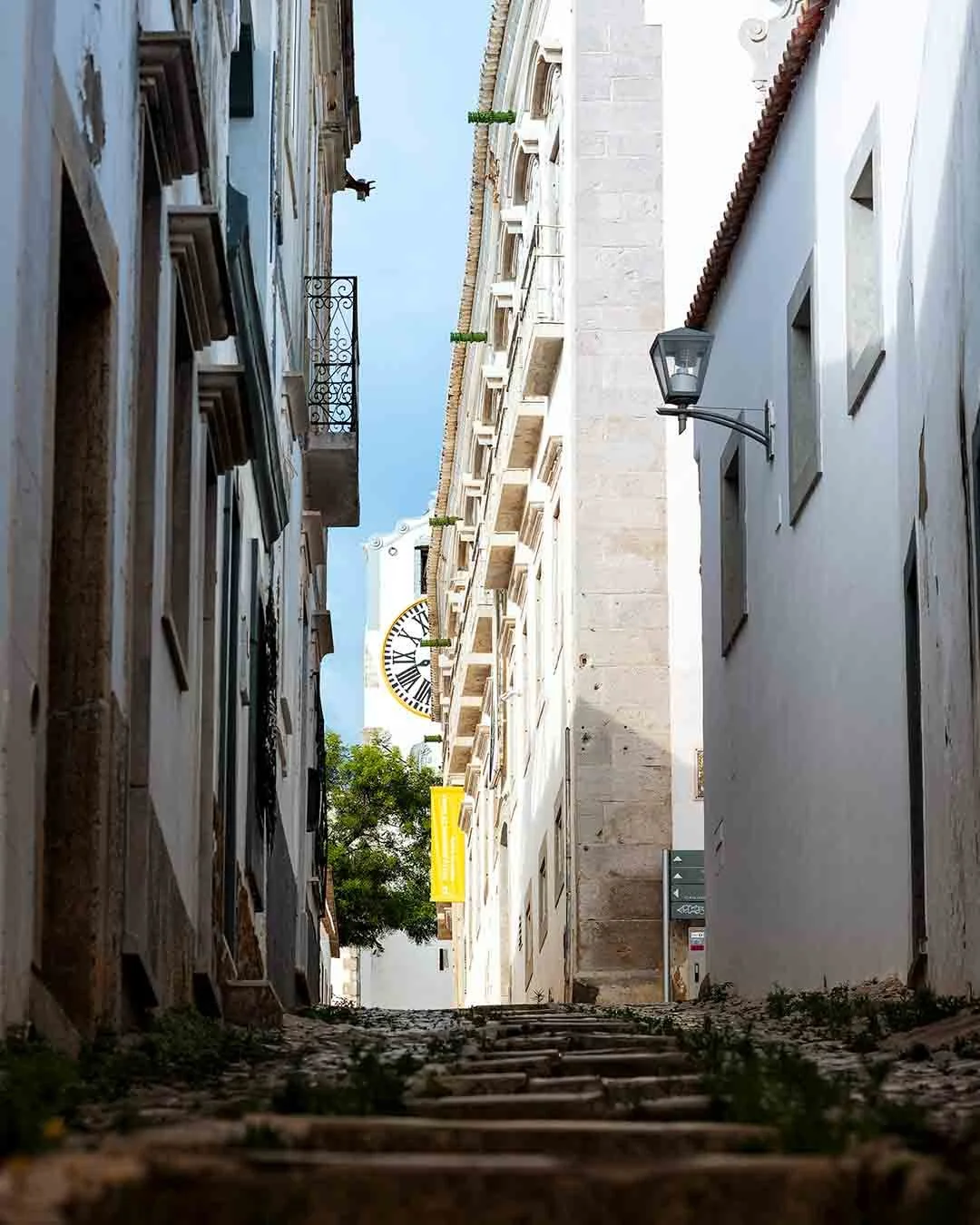
Photographing Tavira in the Early Morning
I occasionally visit Tavira to walk and photograph its historic streets. I particularly enjoy arriving around sunrise, before the town becomes busy with visitors.
Quieter streets give you more freedom to choose a viewpoint and keep unwanted distractions out of the frame. Early light also brings its own challenge: a sunlit building and a shaded street can differ considerably in brightness. Check whether the photograph needs both, or whether a tighter view makes better use of the light.
Sunrise does not mean every street will be illuminated. Buildings can block the low sun, so pay attention to where the light reaches rather than expecting the whole town to have the same conditions.


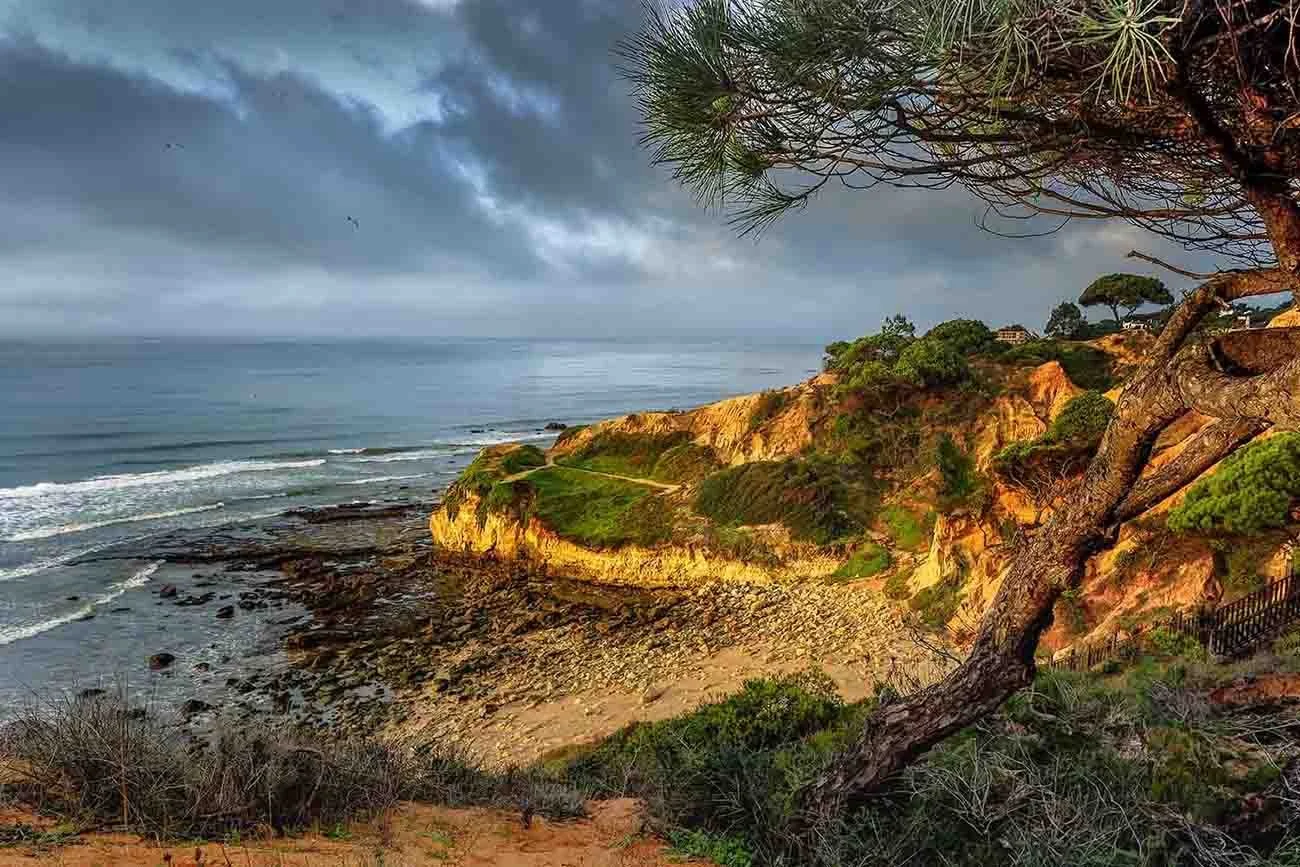
Planning Around Light and Tide
For coastal photography, check where the sun will rise or set in relation to the view you want to photograph. That direction changes through the year. A colourful sky behind the Vilamoura harbour structures and sunlight falling across a cliff face require different positions relative to the sun.
Cloud cover matters too. I enjoy partly cloudy sunrises between Vilamoura and Quarteira, but gaps in the cloud are as important as the amount of cloud. A clear opening near the horizon can allow low sunlight through; dense cloud in that position may block it.
Check the tide time alongside the light. Around Olhos de Água, I photograph at both high and low tide because each changes the coastal view. At Praia dos Arrifes, I favour high tide for the water around the rocks and the movement of the waves.
A tide table tells you the predicted water level, not how far individual waves will reach. Watch the sea before choosing a position, keep a clear route back and allow space for larger waves.
